-
Edge Banding Machine Selection: Precision Matching Based on Capacity and Process
The key to equipment selection is a "matching" mindset, not blindly pursuing high-end specifications.
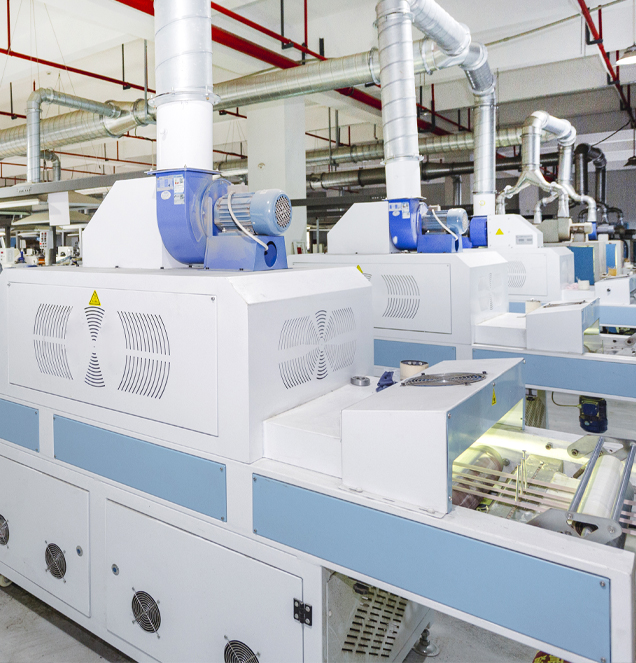
Machine Frame Structure: Prioritize high-precision cast iron or integrated welded frames to ensure long-term operational stability. The material of the upper and lower beams affects guide rail accuracy; aluminum alloy beams are recommended for better flatness.
Tiered Functionality:
- Startups: Basic fully automatic edge banders, focusing on the stability of the end-cutting and trimming units.
- Growing Enterprises: Add laser or PUR functionality, especially suitable for PET and high-gloss boards.
- Industry Leaders: Consider inline integration, such as four-machine linkage for complete four-side edge banding in one pass, achieving a single-shift capacity of 6,000 panels.
Intelligent Interface: Choose equipment that supports servo-driven tape changing, dual glue pot design, and MES system connectivity, reserving space for future upgrades.
-
Tool Selection: Upgrading the Mindset from "Consumables" to "Process Core"
Tools are the final checkpoint determining edge banding quality. Scientific tool management can immediately improve quality.
Core Tool Function Matching
- Pre-milling Cutter: The starting point for high-end edge banding. Removes burrs and chipping from board edges, ensuring tight edge banding adhesion. For high-hardness boards (PET/UV), it is recommended to upgrade from carbide to PCD diamond tools, increasing tool life by 10-30 times (up to 50,000-120,000 meters) with smoother cutting.
- Trimming Tools: Rough trimming quickly removes excess material; fine trimming ensures final smoothness. For PVC edge bands, fine trimming tools with bearings are recommended to prevent scratching the board surface.
- Corner Rounding/Tracing Cutter: Used for shaped panels or chamfering, enabling one-pass R-angle forming.
Standardized Management and Maintenance
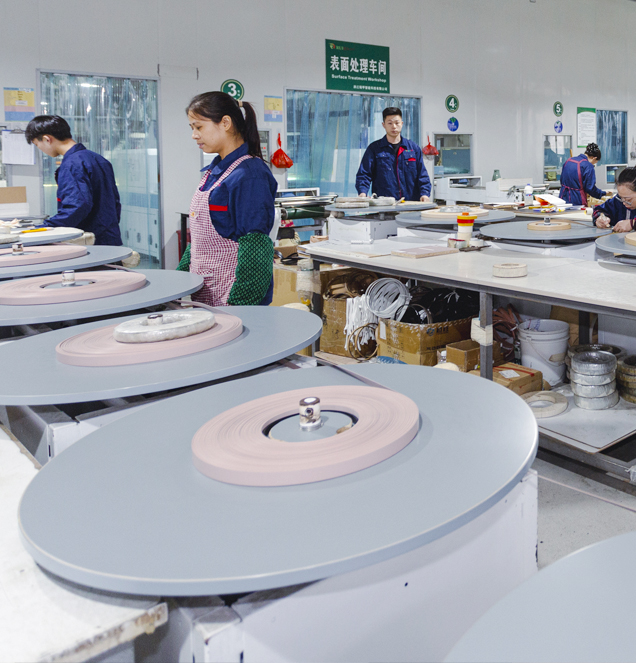
- Establish a tool life log: Replace fine trimming tools every 3-6 months; replace rough trimming tools every 6-12 months based on condition.
- Adjust rotation speed according to board hardness (e.g., 8,000-12,000 RPM for MDF) to prevent tool overheating and softening.
-
Adhesive Selection: The Art of Balancing Physical Bonding and Chemical Reaction
Adhesives are the "lifeblood" of edge banding; wrong choices lead to open seams and blistering.
EVA vs. PUR Hot Melt Adhesives
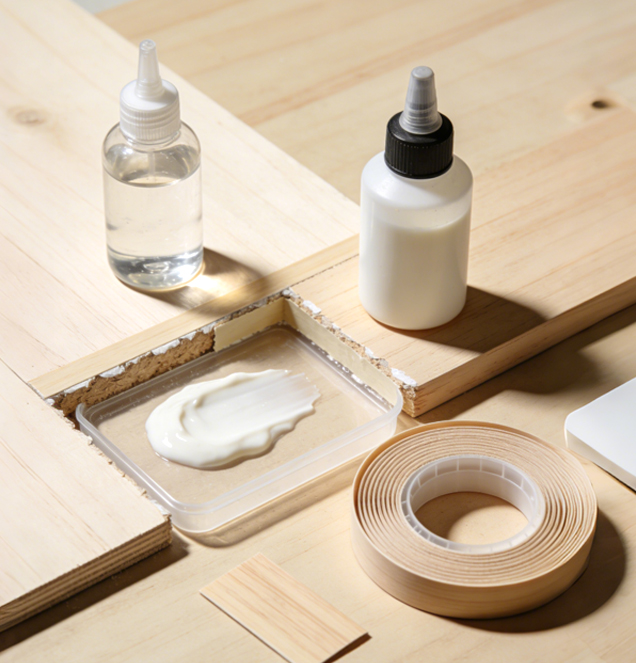
- EVA Adhesive: Traditional mainstream choice, low cost, reversible process. Suitable for standard cabinet panels and dry environments.
- PUR Adhesive: Reacts with moisture to form an irreversible chemical cross-link, offering high heat resistance, water resistance, and bonding strength, with glue application volume only half that of EVA. Ideal for humid environments like kitchens and bathrooms.
Temperature and Viscosity Grading
- Low-Temperature Adhesive (140-160°C): Suitable for manual/semi-automatic equipment and thin PVC or melamine paper, preventing edge band scorching.
- High-Temperature Adhesive (180-210°C): Suitable for medium to large automatic straight-line edge banders. High-speed machines (>25m/min) require high-viscosity adhesive (45,000-120,000 mPa·s at 200°C) to ensure rapid wetting and initial tack.
Environmental Performance
Both EVA and PUR are solvent-free and offer good environmental performance. For food contact or children's furniture, pay attention to specific chemical composition and odor release.
-
Edge Banding Process: From Single-Point Control to System Synergy
Final quality is the systematic integration of equipment, tools, adhesive, boards, and environment.
Digitization of Process Parameters
Establish standard operating instructions to record key parameters under different seasons/board types:
- Glue Application Amount: More is not always better. Melamine strips are prone to glue penetration; generally, control at 6-8g/linear meter.
- Pressure and Temperature: For PVC edge banding, the recommended ambient temperature is 18°C, with hot melt adhesive curing for approximately 30 minutes.
Introduction of Advanced Processes
- Laser Edge Banding: Uses a laser to activate the pre-coated functional layer, fusing it with the board to eliminate the glue line.
- Angled/Bevel Edge Banding and Intelligent Glue Repair: Infrared detection identifies gaps, and a robotic arm dynamically adjusts the glue nozzle for precise repair, solving glue leakage issues on irregular corners.
Inline Integration and Automation Upgrades
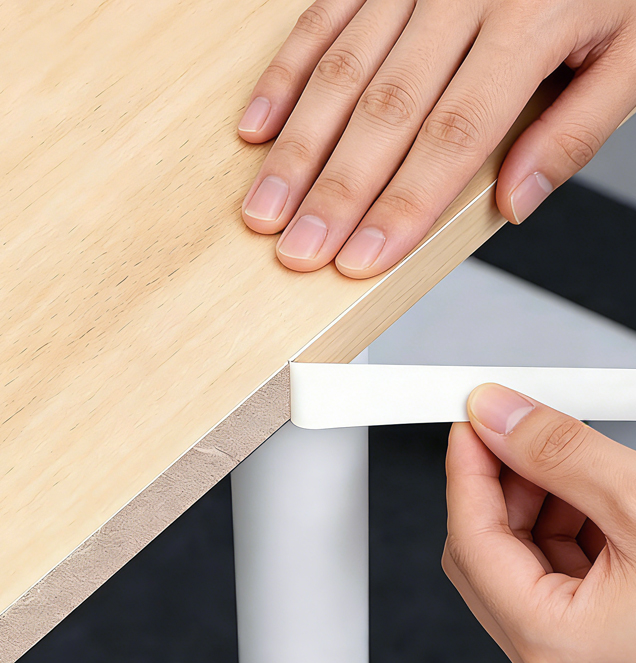
- Narrow Board Modification: Solves processing challenges for small-sized panels.
- Scraper/Blade Optimization: Adjusts the scraping angle and increases the contact surface of the pressure plate template to prevent scratching.
- Multi-Channel Edge Strip Magazine: Upgrade from 2 channels to 6-12 channels, reducing changeover time and adapting to multi-color requirements.


